What Does Skink Mean? Discovering the Lovable Lizard Hiding in Plain Sight
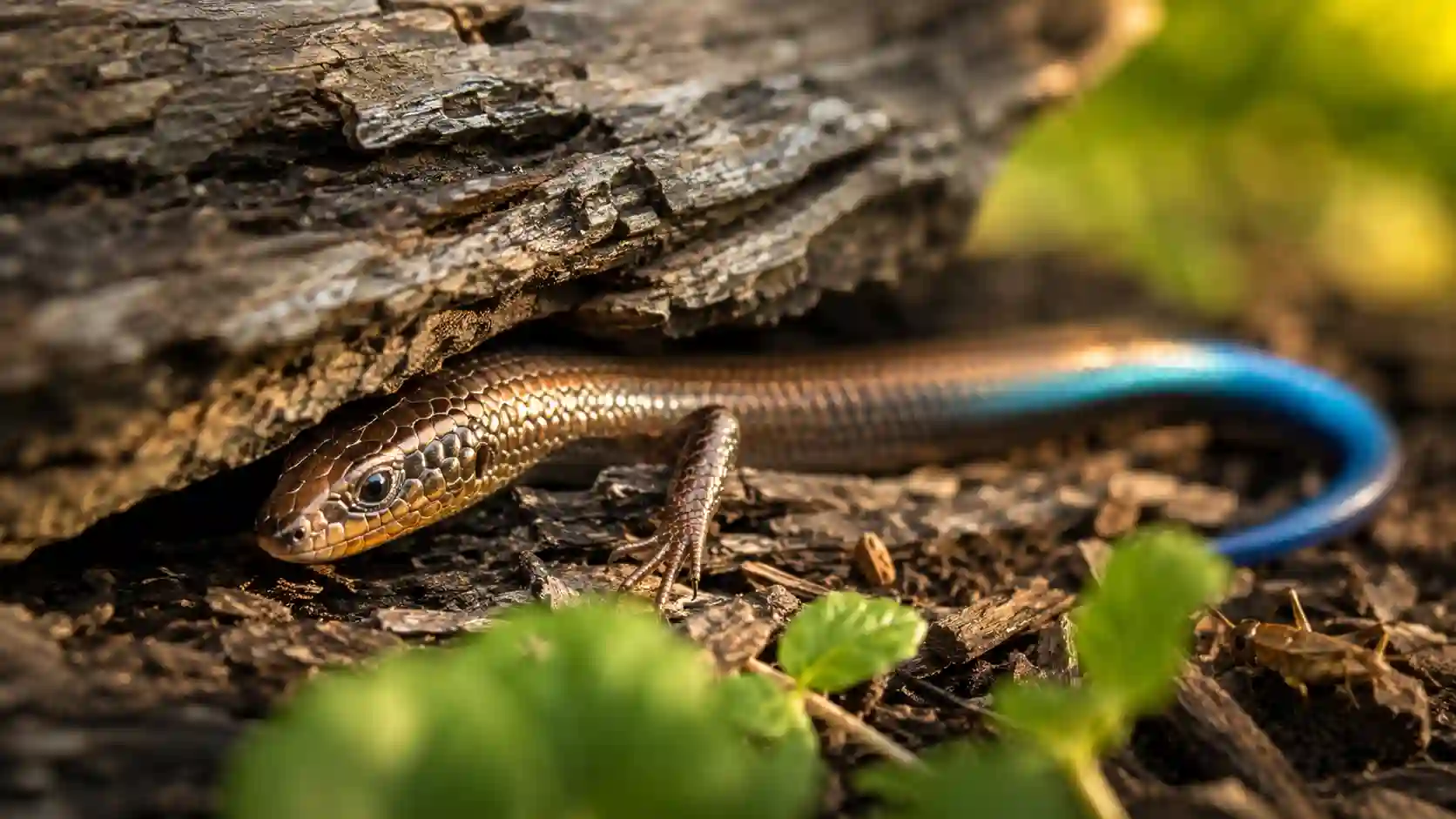
You spot a flash of shiny scales disappearing under a log. Was that a snake? A worm with legs? No. You just glimpsed a creature with a rich skink meaning that stretches from ancient forests to your own backyard. The word “skink” refers to a specific family of lizards called Scincidae, celebrated for their smooth, overlapping scales and often secretive nature. This guide turns you from a casual observer into someone who truly understands these magnificent reptiles.
| Feature | Skink Detail |
| Scientific Family | Scincidae |
| Distinct Trait | Smooth, glossy, overlapping scales |
| Typical Size | 3 cm (Pygmy) to 76 cm (Prehensile-tailed) |
| Common Defense | Tail autotomy (voluntary detachment) |
| Primary Diet | Insectivores (crickets, beetles), some omnivores |
What Truly Defines the Skink Meaning?
The core skink meaning centers on a lizard built for a life between worlds. Unlike typical lizards with rough, keeled scales, a skink’s scales are smooth and fish-like. This adaptation reduces friction, allowing them to swim through loose soil, leaf litter, or sand. Their bodies are cylindrical, supported by short legs or, in some species, no legs at all. The skink meaning therefore implies a master of navigation in tight spaces. When you grasp this definition, you realize a skink isn’t just a lizard; it’s a specialized burrower and a vital thread in the ecosystem’s fabric.
The Secret Language of Smooth Scales
Why do skinks feel so polished? Their scales contain bony plates called osteoderms just under the surface. This creates a flexible armor. That glossy finish, however, serves a dual purpose. It limits moisture loss, a critical advantage in dry climates. When you see a skink, you see evolutionary engineering that marries protection with sleek aerodynamics for a life underground.
Why Do Skinks Have Snake-Like Bodies?
Several skink species evolved elongated bodies and reduced limbs. This isn’t a random mutation. A serpentine shape proves the ultimate tool for burrowing efficiency. Legs can snag on roots. A smooth, cylindrical form slices through sand and soil. The skink meaning, in these cases, blurs the line between lizard and snake. You differentiate them by checking for eyelids and visible ear openings, features snakes always lack.
Vibrant Tails as a Survival Masterstroke
A juvenile skink often sports a brilliant blue or pink tail. This vivid coloration serves as a calculated distraction for predators like birds. The attacker lunges for the bright, wiggling tail. The skink detaches it and escapes. The skink meaning here is purely survivalist. While the stump regenerates, the lizard lives on. I have witnessed a regenerated tail grow back as a muted, cartilaginous stump, a permanent scar of a narrow escape.
Where Skinks Build Their Hidden Kingdoms
You find skinks almost everywhere, from dense tropical rainforests to arid desert dunes. True to their skink meaning, they favor ground-level cover. A decaying log, a pile of rocks, or a thick layer of mulch creates a skink sanctuary. They establish territories rich in insects and hiding spots. For many homeowners, a flower bed with retaining walls becomes a prime skink habitat. They require structural complexity to thrive.
A Day in the Life of a Backyard Predator
Most skinks are diurnal insectivores. A skink actively patrols leaf litter, tongue flicking out to sample chemical cues. Its diet consists of crickets, beetle larvae, slugs, and spiders. This makes the skink meaning synonymous with natural pest control. You might see one basking on a warm stone in the morning to raise its body temperature for hunting. By noon, it vanishes into cool shade, only to re-emerge for an evening feeding session.
Unveiling the Surprising Social Side of Skinks
Research upends the notion of skinks as simple loners. Family life in the Great Desert Skink was described in a paper published in Biology Letters. Parents and offspring cooperatively maintain complex underground tunnel systems. According to the Australian Museum, certain species form long-term monogamous pairs, a rarity among lizards. This reveals a deeper skink meaning involving social cooperation. They build shared burrows, aggressively defend entrances, and recognize kin. This complex behavior showcases a level of social intelligence few attribute to reptiles.
How Skinks Quietly Master Your Garden Ecosystem
A healthy skink population signals a healthy garden. They directly suppress pests that damage ornamental plants and vegetables. A single adult skink consumes dozens of grubs and caterpillars weekly. They also serve as prey for larger predators like kestrels or harmless snakes, thus transferring energy up the food chain. The skink meaning for you, the gardener, translates to a free, non-toxic insect management service. Encouraging them means less reliance on chemical sprays.
What to Feed a Skink in Human Care
Providing proper nutrition requires understanding the wild skink meaning. These are primarily insect-eating specialists. A captive diet must mirror their native prey. Staple feeders include live crickets, dubia roaches, black soldier fly larvae, and mealworms. You must gut-load these insects with nutritious vegetables 24 hours before feeding. Dusting prey with a calcium powder containing vitamin D3 proves non-negotiable. Without it, metabolic bone disease ravages their skeleton. The Royal Society for the Prevention of Cruelty to Animals outlines strict dietary protocols for reptiles, emphasizing varied, live food over processed pellets. I once rehabilitated a skink that recovered solely because we introduced calcium-dusted isopods into its diet.
Threats Facing Wild Skinks Today
Habitat fragmentation poses the gravest threat. Urban development splits contiguous forests into isolated islands. Skinks cannot migrate safely across roads or manicured lawns. Domestic cats, instinctual hunters, decimate local populations. According to the International Union for Conservation of Nature, the Jamaican Giant Galliwasp, a skink relative, already went extinct partly due to introduced predators. Climate change further stresses them by altering hibernation cycles and prey availability. Protecting brush piles and avoiding broad-spectrum pesticides directly aids their survival.
Simple Steps to Attract Skinks Naturally
You can transform a sterile yard into a skink haven. Lay down flat stones that heat up in the morning sun. Pile old clay pipes or terracotta pots as cool retreats. Plant native groundcovers like creeping boobialla or dense shrubs. Crucially, provide a shallow water dish with pebbles for safe drinking. A chemical-free zone with composted mulch invites the insects skinks eat. A log half-buried in soil becomes a condo, not just a decoration.
Skink Meaning in Ancient Myths and Modern Culture
Historically, the skink meaning carried medical weight. Ancient Egyptian medical papyri reference skink flesh in treatments for various ailments. Indigenous Australian Dreamtime stories often portray skinks as clever, nimble tricksters who outwit larger foes. In modern symbolism, the skink represents regeneration and the wisdom to retreat and regrow. Its dropped tail reminds you that releasing what’s damaged allows for survival and, eventually, renewal. These cultural imprints highlight a deep-seated respect for the animal.
How to Tell Skinks Apart from Ordinary Lizards
You focus on three traits. Skinks have overlapping, cycloid scales that feel glass-smooth, unlike the granular, rough skin of geckos or iguanas. Their heads blend almost seamlessly into the neck; there is no distinct constriction. Leg movement appears to glide the body along the ground in a serpentine wave. A true gecko has immovable eyelids and toe pads, while a true skink has movable eyelids and simple clawed toes. These key distinctions help you assign the correct skink meaning in the field.
Frequently Asked Questions About Skink Meaning
Q: What is the true skink meaning in ecology?
A: The skink meaning in ecology refers to its dual role as both a primary consumer of invertebrates and a critical prey item for larger animals. Skinks cycle soil nutrients through their burrowing action. They keep insect populations, including many agricultural pests, from exploding unchecked.
Q: Does the skink meaning change across different regions?
A: Yes. In Australia, the skink meaning often ties into the identity of an adaptable, ancient survivor of the continent’s drying climate. In North America, the skink meaning leans toward that of a secretive, beneficial garden dweller that people rarely observe but frequently host.
Q: How does a legless skink still fit the skink meaning?
A: The skink meaning perfectly accommodates leglessness because the defining trait lies in the smooth, armored scales and genetic lineage, not the limbs. A legless skink retains eyelids and ear openings. Its internal skeleton still carries remnants of limb girdles, unlike a snake.
Q: Can a skink bite you, and is it dangerous?
A: A skink can bite in self-defense. Their teeth are small and sharp, meant for gripping insects, and their jaws produce only mild pressure. The bite feels like a pinch, rarely breaks human skin, and carries no venom or significant disease risk. They prefer flight to confrontation.
Q: What does finding a skink in your house spiritually mean?
A: Symbolically, the skink meaning in a home context speaks of adaptability and releasing burdens. Because skinks drop their tails to survive, their visit might suggest you need to let go of a draining situation or person to regain your own strength.
Q: How long does a skink typically live?
A: Lifespan varies dramatically based on the species. Small garden skinks might live 2 to 3 years in the wild. However, larger species like the Blue-tongued Skink consistently reach 15 to 20 years in human care, with some documented cases exceeding 30 years, marking them as a long-term commitment.
Deepen Your Connection to the Scaly World
You started by asking for a simple skink meaning. You now hold a complete picture of a resilient, socially complex, and vitally important creature. These smooth-scaled survivors thrive on the edges, in the leaf litter and rock cracks where you rarely look. Their mastery of regeneration and secretive survival holds lessons for any living thing facing a changing world.
Stop treating that rustle in the leaves as background noise. Get a field guide tailored to your nation or state. Survey a sunny rock wall tomorrow morning. Photograph what you find and share it with a community science project like iNaturalist. Your own observations of skink meaning in action will contribute valuable data for researchers tracking population health. Build that brush pile. Plant the native shrubs. Give the skinks a home, and they will reward you with a pest-free, thriving landscape buzzing with life.