Piercing Bump vs Keloid: How to Tell Them Apart
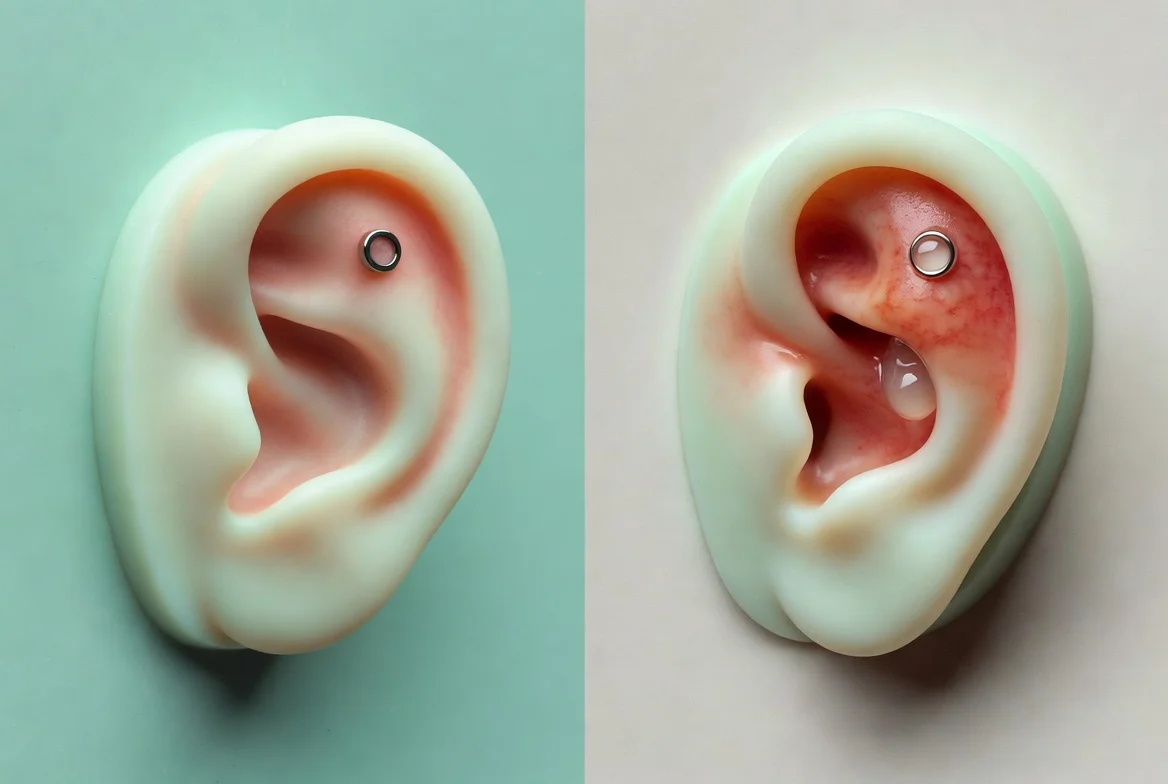
You’re standing in front of the mirror, heart sinking a little. Your new piercing, which was healing beautifully, now has a bump. Your mind immediately goes to the worst-case scenario: Is it a keloid? Is this permanent? If you’re frantically searching “piercing bump vs keloid,” take a deep breath. You’re not alone, and more importantly, what you’re seeing is probably not a keloid.
This guide will give you the clear, visual, no-nonsense information you need to tell the difference between a common irritation bump and a true keloid scar, right now. We’ll cover exactly what to look for, how to treat it, and when it’s time to call in a professional.
Key Takeaways: Piercing Bump or Keloid?
- A piercing bump is usually a fluid-filled irritation bump, a pustule, or a hypertrophic scar—not a keloid—and it often resolves with proper aftercare.
- A true keloid is a raised, smooth scar that grows beyond the original wound boundaries, feels firm and rubbery, and will not regress without medical treatment.
- The quickest visual clue: Irritation bumps sit directly on the piercing hole. Keloids form a larger, distinct mass that extends beyond the pierced area.
- Most “keloids” people worry about are actually temporary irritation bumps—but if a bump continues to grow for several months, a dermatological evaluation is essential.
What Is a Piercing Bump? (The Common Culprits)
A piercing bump is a small, raised area of skin that forms at the entry or exit point of a healing piercing. It’s a localized reaction, and in the vast majority of cases, it’s your body’s temporary response to irritation—not a permanent scar.
Think of it as your piercing throwing a small tantrum. It’s inflamed and angry, but with the right care, it will calm down. These bumps typically show up within a few weeks or months of getting pierced. The most common triggers include sleeping on the piercing, snagging it on clothing or hair, using harsh cleaning products like alcohol or hydrogen peroxide, or having a sensitivity to the jewelry material, like nickel.
There are a few usual suspects that fall under the “piercing bump” umbrella:
- Irritation Bump (Pyogenic Granuloma-like): These are the most common. They often look like a small, red, moist, or slightly bloody pimple directly on one side of the piercing hole. They can ooze a clear or yellowish fluid and crust over.
- Pustule (Small Pus Bump): Just like a typical pimple, this is a small, white or yellow-headed bump filled with pus. It’s a sign of a localized, minor infection, often from bacteria introduced by touching.
- Hypertrophic Scar: This is a firm, pink, or flesh-toned bump of excess scar tissue. The key feature here is that it stays strictly within the boundaries of the original piercing channel. It’s basically your body laying down a bit too much collagen in a very disciplined way.
What Is a Keloid? (The Real Deal)
A keloid is an overgrowth of dense, fibrous scar tissue that extends beyond the boundaries of the original wound. It forms a smooth, shiny, raised mass that can be pink, red, or darker than the surrounding skin. Unlike an irritation bump, a true keloid does not ooze or crust over. It feels firm and rubbery, and it can continue to grow slowly for months or even years.
The tendency to form keloids is genetic. You’re at a significantly higher risk if you or a close family member has a history of them, and they are more common in people of African, Asian, and Hispanic descent. A key characteristic that separates it from a hypertrophic scar is that a keloid is like a vine that has outgrown its trellis, whereas a hypertrophic scar stays confined to the original wound. If you’ve ever had a keloid before, any new piercing comes with a high probability of forming another one.
Piercing Bump vs Keloid: 7 Key Differences
This is the quick-reference table you came for. Use it to scan the differences instantly.
| Feature | Piercing Bump (Irritation/Hypertrophic) | Keloid |
| Location | At the piercing exit hole, sitting right on the entry/exit point. | Can extend well beyond the original piercing site, like a growth that has swallowed the jewelry. |
| Shape | Small, round or slightly elongated; follows the piercing channel. | It grows outside the boundaries of the wound and is irregular, elevated, and frequently dome-shaped. |
| Texture | Soft or slightly firm; may ooze clear fluid, pus, or form a crust. | Firm, rubbery, and smooth to the touch. No discharge. |
| Color | Red, pink, or flesh-toned; may have a yellowish fluid center. | Pink, red, purple, or dark brown with a uniform surface. |
| Growth Pattern | Appears rapidly within weeks, may fluctuate in size; often shrinks with dedicated aftercare. | Grows slowly and persistently over months. Rarely, if ever, regresses on its own. |
| Pain/Itch | Mild tenderness, soreness, or pain when touched. | Can be intensely itchy, tender, or even painful with a stretching sensation. |
| Response to Care | Improves with saline soaks, a jewelry change to high-quality metal, or leaving it alone. | Does not respond to at-home care. Requires dermatological intervention. |
The real differentiation between a piercing bump and a keloid lies in the behavior. An irritation bump is a reactive, inflammatory condition. A keloid is a progressive, scar-tissue growth condition. If your bump is weeping and has a crusty center, breathe a sigh of relief—that’s a hallmark of an irritation bump, not a keloid scar.
Visual Guide: How to Spot a Keloid vs an Irritation Bump on Your Piercing
Let’s paint a picture. Imagine you have a cartilage piercing on your upper ear that’s acting up.
What an irritation bump looks like: You see a small, angry red pimple right where the earring post enters your skin. It might have a donut-like shape around the hole, or it’s a one-sided bump that appears overnight after you accidentally slept on it. It looks wet or crusty and is directly hugging the jewelry.
What a keloid looks like: Instead of a pimple, you see a smooth, shiny ball of flesh that has grown to one side of the hole, making the earring look off-center or sunk in. The mass is larger than the original piercing and feels solid, not poppable. It’s the difference between a temporary protest and a permanent structural addition.
Certain piercings are more prone to bumps than others. Keloids favor areas with high skin tension, like the upper ear (cartilage), chest, back, and shoulders. Irritation bumps are democratic—they love the nostril, the navel, and especially cartilage piercings with poor blood supply, like the helix.
What Causes a Piercing Bump to Form?
A piercing bump is not a personal failing. It’s a biological billboard signaling that the delicate healing environment has been disrupted. Common causes include:
- Physical Trauma: Snagging the jewelry on a towel, sleeping on a fresh piercing, or playing with it.
- Using alcohol, hydrogen peroxide, tea tree oil, or harsh antibacterial soaps might cause chemical irritation. These kill fragile new cells and dry out the skin, triggering more inflammation.
- Moisture and Debris: Leaving hair products, makeup, or just plain water to sit on the piercing. A damp environment breeds bacteria and weakens the healing tissue.
- Jewelry Issues: An allergy to nickel in low-quality jewelry, incorrect jewelry length (too long causes friction, too short causes embedding), or rings in unhealed piercings that rotate and drag crust through the channel.
- Poor Blood Supply: Cartilage areas like the upper ear have less blood flow, making them slower to heal and more prone to hypertrophic scarring when irritated.
What Causes a Keloid to Form on a Piercing?
The root cause of a keloid is an inherited malfunction in the wound-healing process. In some individuals, the body doesn’t get the “stop” signal. Collagen-producing cells called fibroblasts go into overdrive, producing a dense, fibrous mass of scar tissue that piles up and spills over the wound’s borders.
This is triggered by the initial wound itself—the piercing—and can be exacerbated by delayed healing, infection, or excessive tension on the wound. This is why if you’ve ever formed a keloid on a minor scratch, vaccine site, or an earlobe piercing, getting a cartilage piercing is a very high-stakes gamble. It’s a strongly genetic predisposition, and a personal or family history is the single biggest risk factor.
Treatment Options: How to Get Rid of a Piercing Bump
The best treatment for an irritation bump is to remove the source of irritation. This is where the mantra LITHA (Leave It The Hell Alone) comes from.
Step-by-Step At-Home Care Routine:
- Switch to Sterile Saline: Ditch all potions and oils. Use only a sterile saline wound wash (containing 0.9% sodium chloride and water, with no additives) twice a day. Let it air dry or pat gently with non-woven gauze.
- Implement a Warm Compress: For hypertrophic or fluid-filled bumps, a warm saline compress can work wonders. Soak a clean gauze pad in warm saline solution and hold it against the bump for 5-10 minutes once or twice a day. This increases blood flow and encourages fluid drainage.
- Downsize Your Jewelry: Visit an APP-certified piercer to switch to an implant-grade titanium or niobium flat-back labret stud. This is a biocompatible, hypoallergenic material. A shorter bar that sits flush will eliminate movement and friction, which is often the single change that makes the bump disappear.
- Eliminate All Physical Trauma: Don’t sleep on it. Use a travel pillow with a hole in the center if you side-sleep. Don’t twist, turn, or touch the jewelry. Don’t remove the jewelry if you suspect an infection, as the hole can close and trap the infection inside.
When to See a Piercer or Doctor: If the bump doesn’t improve after 2-4 weeks of this dedicated care, or if you see signs of a spreading infection—redness that’s expanding, heat, severe pain, or a fever—you need to see a professional.
Treatment Options: How to Treat a True Keloid
This is critical: you cannot treat a true keloid at home. No essential oil, aspirin paste, or silicone gel you buy online will make it go away. The gold standard first-line medical treatment is a series of corticosteroid injections (triamcinolone) administered directly into the keloid by a dermatologist every 4-6 weeks. This works to flatten the scar and relieve itchiness.
Other medical options include:
- Silicone Gel/Sheets: Used as a preventive measure after injection or surgery, they apply pressure and hydration to flatten and soften the scar.
- Cryotherapy: Freezing the keloid from the inside or outside, which is especially effective on smaller scars.
- Surgical Excision: A scalpel removal of the keloid. On its own, this has a frighteningly high recurrence rate (the keloid often grows back larger). It must be paired with immediate post-op pressure therapy, steroid injections, or superficial radiation.
- Laser Therapy and 5-FU Injections: Alternatives used to reduce bulk and redness.
Never, ever attempt to cut off a keloid at home. You will cause a massive wound that will likely heal into an even bigger keloid.
Can You Pop a Piercing Bump? (And Other Dangerous Advice)
No. Absolutely not. You cannot pop a piercing bump, and you shouldn’t try.
Here’s why: An irritation bump isn’t a normal pimple. It’s an inflamed mass of granulation tissue or a fluid-filled sac. Squeezing it with your fingers introduces a cocktail of bacteria into an open wound, turning a sterile inflammation into a raging infection. What would have been a passing bump can become a deep, painful abscess or a much larger hypertrophic scar. Popping is the single fastest way to guarantee a worse scar.
Piercing Aftercare: Preventing Bumps and Keloids Before They Start
You make a commitment to prevention with your piercing right away.
- Choose Your Piercer Wisely: An APP-certified piercer uses sterile, single-use needles and implant-grade jewelry, correctly sized for your anatomy.
- Master the Aftercare: A sterile saline spray twice a day, followed by gently drying, is all you need. No twisting.
- Protect the Area: Keep hair, makeup, and harsh skincare products away from the site. Be conscious of seatbelts, high-waisted pants, and loofahs.
- Know Your History: If you or a blood relative has a history of keloids, you must inform your piercer. For a high-risk individual, the safest choice might be to avoid a permanent piercing altogether or to use a “pressure earring” on a healed earlobe piercing as a preventive, under a dermatologist’s guidance.
Frequently Asked Questions
Can a piercing bump turn into a keloid?
No. An irritation bump is an inflammatory response, not a scar cell disorder. It will not transform into a keloid unless you were already genetically predisposed to form one at that site.
How long does it take for a pierced lump to disappear?
With perfect aftercare—saline only, no touching, and jewelry downsized to implant-grade titanium—a piercing bump can begin to shrink within a week and resolve completely in 2 to 4 weeks. Hypertrophic scars take longer, often months, to soften and fade.
What is the appearance of a keloid on a piercing?
It looks like a smooth, shiny, firm, domed mass of skin. It typically appears on one side of the piercing hole and extends past the jewelry, making the piercing look lopsided. It can be pink, red, or darker than your normal skin tone.
Are keloids from piercings permanent?
Yes, a true keloid is a permanent scar and will not disappear on its own. However, board-certified dermatologists have treatments like corticosteroid injections and cryotherapy that can flatten, shrink, and significantly improve their appearance.
Can I still keep my piercing if I have a keloid?
You should remove the jewelry and see a dermatologist immediately. Leaving the jewelry in acts as a constant source of tension and inflammation, which can fuel further keloid growth.
How quickly can a piercing bump be removed?
The fastest path is removing the source of the problem. Identify the trauma: switch to an implant-grade titanium flat-back bar that’s sized for your healed anatomy, and commit to a strict, twice-daily sterile saline routine without exception.
Conclusion
The lump next to your new jewelry doesn’t have to be a source of panic. Statistically speaking, you’re dealing with a temporary, totally fixable irritation bump. Give it a name, commit to a gentle saline-only routine, and leave it alone. Watch it shrink over the following weeks.
The real difference between a piercing bump and a keloid is a matter of boundaries and behavior. If it weeps, crusts, and stays on the hole, it’s a bump. If it’s a smooth, shiny mass that’s slowly and silently growing beyond the piercing, it’s time to book an appointment with a board-certified dermatologist. You’ve got the visual guide now, so take a deep breath, step back from the mirror, and give your body the chance to heal.