Teach Me First Manga: Your Complete Beginner’s Roadmap to Japanese Comics
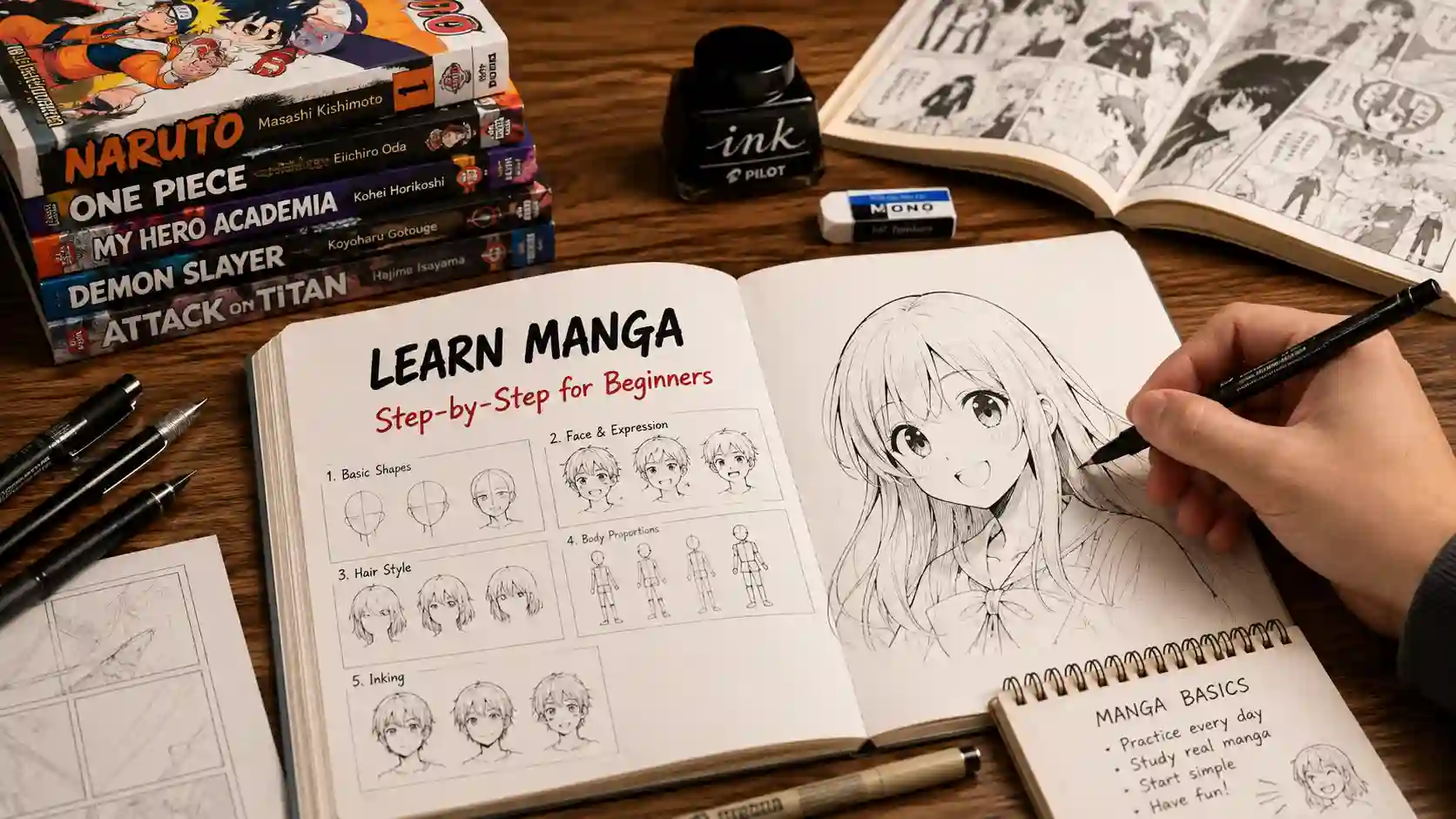
Walking into a manga store or scrolling through a digital catalog feels overwhelming when you have no clue where to start. Thousands of titles stare back at you, each with strange names and unfamiliar covers. This guide exists to fix that paralysis. If you have ever muttered the words “teach me first manga,” this page hands you a clear, friendly entry point without the confusion or gatekeeping.
Table of Contents
- What Makes Manga Different from Western Comics
- The Right Reading Direction Nobody Warns You About
- How Manga Volumes and Chapters Actually Work
- Shonen, Shojo, Seinen, and Josei: The Four Pillars
- 10 Beginner-Friendly Series That Welcome New Readers
- Digital Platforms vs. Physical Books: Making the Choice
- Understanding Panel Flow and Visual Storytelling
- Common Mistakes First-Time Readers Make
- English Translations, Official Releases, and Fan Scanlations
- How to Build Your Personal Reading List
- FAQs About Starting Your First Manga
- Your Next Step Beyond the First Page
What Makes Manga Different from Western Comics
Manga originates from Japan and carries a storytelling rhythm entirely its own. Unlike American superhero comics that often reset or reboot, manga typically follows one creator’s singular vision from start to finish. This means you get a complete, self-contained narrative arc.
The art style emphasizes expressive eyes, dynamic speed lines, and cinematic panel compositions that pull your eye across the page in deliberate ways. Black-and-white illustrations dominate the interior pages, which actually sharpens the focus on character emotions and action sequences. Color remains reserved for special edition covers and occasional bonus pages. According to the Smithsonian National Museum of Asian Art, manga’s roots trace back to 12th-century Japanese scrolls, making it a cultural art form centuries older than its modern paperback form suggests.
The Right Reading Direction Nobody Warns You About
Here is the single most disorienting hurdle: manga reads from right to left. You open what Western readers consider the back cover. The spine sits on the right side. Panels flow top-to-bottom and right-to-left across each page.
This takes roughly two chapters to feel natural. Publishers like VIZ Media include a warning page at the “back” of each volume that says, “You’re reading the wrong way!” Flip past it, start from what feels like the end, and trust the process. Your brain adapts faster than you think.
How Manga Volumes and Chapters Actually Work
Manga chapters debut individually in thick anthology magazines released weekly or monthly in Japan. After enough chapters accumulate, publishers collect them into tankobon volumes—the paperback books you see on store shelves. A single volume typically holds six to ten chapters.
When someone asks, “teach me first manga,” the natural follow-up question becomes whether to start with Chapter 1 or Volume 1. The answer: always Volume 1, Chapter 1. Do not read Volume 7 just because the cover art appeals to you. Serialized storytelling punishes skipping ahead.
Shonen, Shojo, Seinen, and Josei: The Four Pillars
Understanding demographic categories clears up the confusion fast.
| Demographic | Target Audience | Common Themes | Example Title |
| Shonen | Teen boys | Adventure, rivalry, self-improvement | One Piece |
| Shojo | Teen girls | Romance, relationships, emotional growth | Fruits Basket |
| Seinen | Adult men | Psychological depth, moral complexity | Berserk |
| Josei | Adult women | Realistic romance, daily life struggles | Chihayafuru |
These labels describe the magazine’s intended readership, not strict rules about who can enjoy them. Millions of adults read shonen series. Plenty of men adore shojo stories. Pick what interests you, not what a demographic label prescribes.
10 Beginner-Friendly Series That Welcome New Readers
When the request is “teach me first manga,” series selection matters more than any other factor. Here are ten titles that demand zero prior knowledge.
- One Piece – A rubber-bodied pirate searches for the ultimate treasure. Friendship and perseverance drive this long-running adventure.
- Fullmetal Alchemist – Two brothers commit a forbidden alchemical act and pay a devastating price. Tightly plotted with a satisfying conclusion.
- Death Note – A genius student discovers a notebook that kills anyone whose name he writes inside. A cat-and-mouse thriller from page one.
- Spy x Family – A spy, an assassin, and a telepathic child form a fake family for a mission. Comedy and heart blend perfectly.
- My Hero Academia – In a world where nearly everyone has superpowers, one quirkless boy refuses to give up on his hero dream.
- Fruits Basket – An orphaned girl discovers her new family’s zodiac curse. Emotional storytelling with deep character work.
- Demon Slayer – A kind-hearted boy fights demons to cure his transformed sister. Stunning action with simple, powerful stakes.
- Haikyu!! – A determined volleyball team aims for national tournaments. You need zero sports knowledge to love this series.
- Tokyo Ghoul – A college student becomes half-ghoul after a violent encounter. Dark, introspective horror with moral questions.
- Yotsuba&! – A quirky little girl explores everyday life with infectious wonder. Pure joy in comic form.
According to research published in the Journal of Adolescent & Adult Literacy, manga’s blend of textual and visual storytelling improves reading comprehension for reluctant readers, making these books great starting points. regardless of reading confidence.
Digital Platforms vs. Physical Books: Making the Choice
Digital subscriptions offer instant access and save shelf space. The Shonen Jump app provides entire back catalogs for a monthly fee lower than one physical volume. VIZ Media and Kodansha both maintain robust digital storefronts.
Physical volumes deliver the tactile satisfaction of flipping actual pages right-to-left. Larger art spreads impress more on paper. By collecting, you can create a customized library that showcases your preferences.
Neither option is wrong. Many readers mix both, subscribing digitally for weekly chapters while purchasing physical copies of beloved favorites.
Understanding Panel Flow and Visual Storytelling
Manga artists use techniques absent from Western comics. Speed lines create motion blur. Backgrounds dissolve into abstract patterns during emotional peaks. Chibi deformations (super-deformed, cute miniature character versions) signal comedic beats.
Empty gutters—the white space between panels—give your brain time to fill in the action. This participatory reading experience, noted by comics theorist Scott McCloud in Understanding Comics, activates your imagination differently than passive media consumption.
Common Mistakes First-Time Readers Make
First-time readers who ask, “teach me first manga,” often stumble in predictable ways.
- Starting with a sequel or spin-off without reading the original work
- Flipping left-to-right out of habit and blaming the book for being confusing
- Judging an entire demographic based on one title they disliked
- Watching the anime adaptation first and assuming the manga adds nothing new
- Buying Volume 14 because the cover art looked cool, then complaining nothing made sense
Avoiding these pitfalls keeps your early experience frustration-free. The guide Manga in Theory and Practice by Hirohiko Araki, creator of JoJo’s Bizarre Adventure, emphasizes that manga rewards patient, sequential engagement rather than fragmented sampling.
English Translations, Official Releases, and Fan Scanlations
Official translations come from licensed publishers who pay creators for their work. These releases maintain quality control on translation accuracy, lettering, and print production. The industry is sustained by supporting official releases.
Fan scanlations—unauthorized scans translated by volunteers—circulate freely online for unlicensed series. While they fill access gaps, they provide no financial support to manga artists who often work punishing schedules for modest pay. When the series you want teaches you first manga lessons, choose official channels whenever available.
How to Build Your Personal Reading List
Start with one completed series and one ongoing series. A completed title like Fullmetal Alchemist (27 volumes) gives you a finish line. An ongoing series like Spy x Family (currently releasing) keeps weekly excitement alive.
Track your reading on platforms like MyAnimeList or AniList. These sites recommend titles based on what you already enjoy. Rate honestly. Your future self will appreciate the record when someone new asks you, “teach me first manga.”
FAQs About Starting Your First Manga
Which manga should I read first if someone needs to teach me first manga basics?
Pick Fullmetal Alchemist or Spy x Family. Both deliver complete satisfaction without assuming any cultural knowledge. Either title serves as the perfect answer when beginners request, “teach me first manga.”
Do every manga have to be read from right to left?
Yes. Every official English translation preserves the original right-to-left format. Reading left-to-right scrambles the panel sequence and ruins the storytelling flow designed by the artist.
How long does it take to adjust to right-to-left reading?
Most readers adjust within two chapters. By Chapter 3, the direction feels automatic. The initial awkwardness passes quickly.
Is it bad to watch the anime before reading the manga?
Not bad, but different. Anime adaptations change pacing, cut subplots, and sometimes diverge entirely. If a series teaches you first manga appreciation through its anime, the source material almost always adds deeper layers.
How much does it cost to start reading manga?
Digital subscriptions like the Shonen Jump app cost roughly $2.99 monthly for thousands of chapters. Physical volumes retail between $9.99 and $14.99 each. Libraries increasingly stock manga collections, making free access widely available.
Can children read manga safely?
Yes, with parental guidance on demographic labels. Yotsuba&! suits all ages. Shonen titles like My Hero Academia target teens. Seinen works like Berserk contain graphic content for adults only. Check the publisher’s age rating printed on the back cover.
Your Next Step Beyond the First Page
A single volume can spark a lifelong reading habit. The person searching “teach me first manga” today might become the friend recommending hidden gems tomorrow. Grab Volume 1 of any title on the list above. Flip to the “back.” Read right to left. Let the ink-drawn eyes and speed-lined action pull you into stories that have captivated readers across the globe for generations.