Direct Earnings Attachment Meaning: Stop the Confusion and Know Your Rights
Introduction
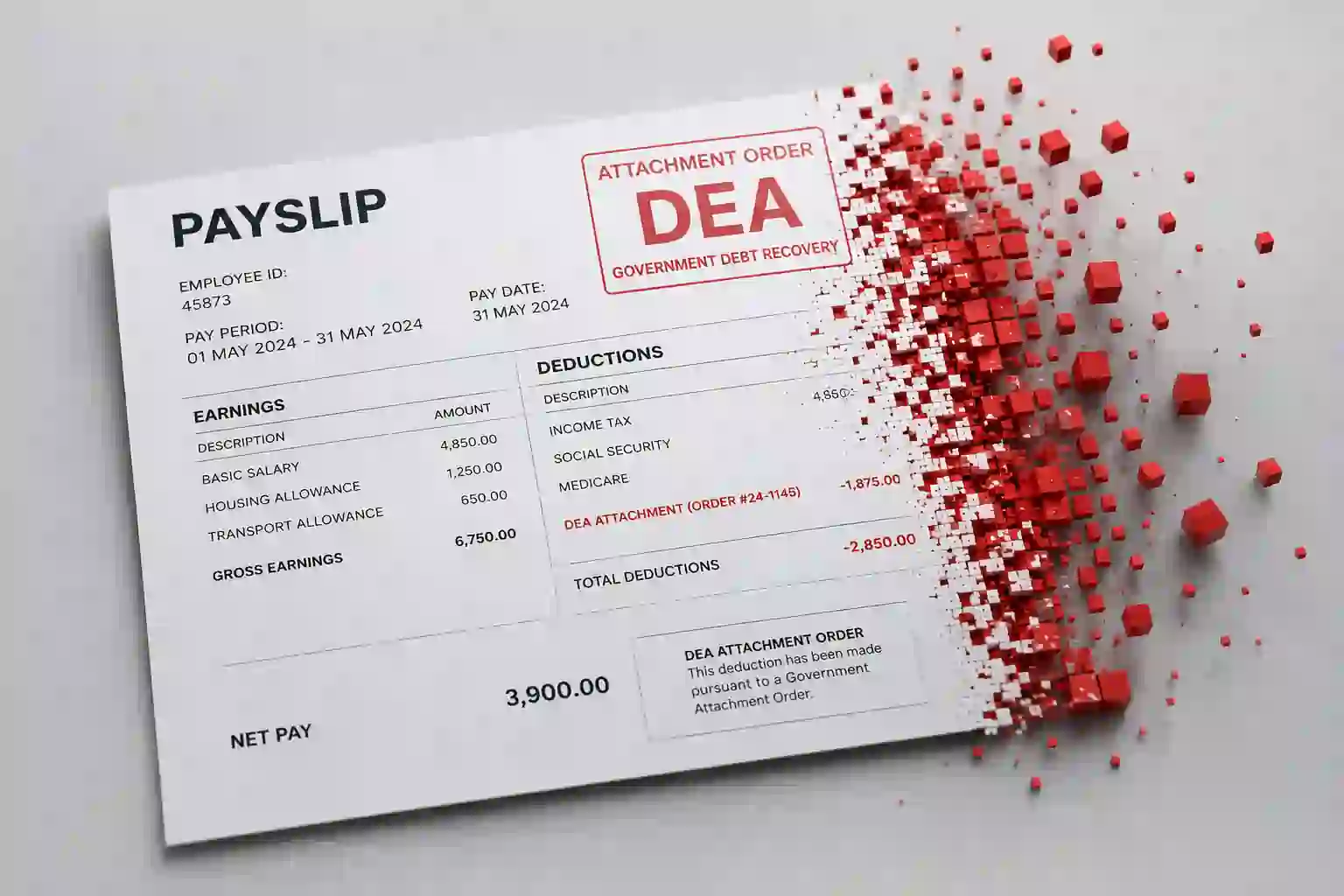
Finding a surprise deduction on your payslip creates instant panic. You worked those hours, yet the money isn’t there. That shock usually comes from a direct earnings attachment meaning you didn’t fully understand until now. This isn’t a random bank error; it’s a legal mechanism that forces your employer to take money before you receive it. You need a clear, immediate breakdown of how to stop the spiral, calculate the damage, and protect your household income.
Essential Navigation: Understanding Direct Earnings Attachment Meaning
| Aspect | Detailed Breakdown | Why It Matters |
| Core Definition | A legal order from the DWP forcing your employer to deduct arrears directly from net pay. | Knowing the strict direct earnings attachment meaning shifts you from panic to a calculated defensive strategy. |
| Legal Origin | Social Security Administration Act of 1992 and Child Support Act of 1991. | It’s statutory law, not a commercial request. Ignoring it triggers immediate employer liability. |
| Triggering Debt | Universal Credit overpayments, Tax Credit fraud, Social Fund loans, Administrative Penalties. | These are public debts owed to the state, not private credit cards. |
| Standard Deduction | 40% of net earnings if you have no dependents; usually reduced to 30% if supporting a household. | Understanding the fixed rate reveals the exact impact on your rent money before the payment arrives. |
| Employer Duty | Legally mandated to comply within a specific timeframe or face fines for non-compliance. | Your payroll manager has no choice. It’s not a personal attack; it’s their legal duty. |
What Exactly is a Direct Earnings Attachment? The Clear Definition
The precise direct earnings attachment meaning is a statutory demand served by the Department for Work and Pensions (DWP) directly to your employer’s payroll department. It allows the DWP to legally seize a fixed percentage of your net earnings to recover an outstanding benefit debt without applying for a court order.
Unlike a bailiff visit or a County Court Judgment, this process is administrative. It bypasses the courtroom entirely. Your employer acts as the involuntary collection agent, deducting the money from your salary, wages, or pension and sending it directly to the DWP’s Debt Management unit. The payment is taken after National Insurance and Income Tax are calculated but before the money hits your bank account.
How a DEA Differs from a Direct Pay Order (DEO)
Mixing up legal terms causes expensive mistakes. While both involve deductions from your pay, their origins are completely different.
- Direct Pay Order (DEO): This comes from the Child Maintenance Service (CMS) for unpaid child maintenance. It’s about family support, not benefit debt.
- Direct Earnings Attachment (DEA): This is exclusively for DWP benefit debt. It targets Tax Credit overpayments or social security fraud.
- Priority Conflict: If an employer holds a DEO and a DEA, the DEO for child maintenance takes first legal priority over the DWP debt.
The Brutal Truth: How Much Can the DWP Take?
You cannot negotiate the percentage during the attachment. The law sets fixed deduction rates based on your net income. This is the harsh reality of the direct earnings attachment meaning—it’s a rigid formula.
- Standard Deduction Rate: 40% of your net weekly or monthly earnings.
- Protected Earnings Level: 60% of your net income must remain after the DWP.
- Pension Attachments: If you receive a pension, a DEA can still bite, but the calculation method may differ, often targeting a specific fixed amount rather than a sweeping percentage.
If your net pay is £500 per week, a 40% deduction takes £200, leaving you with £300 to cover all bills. Claiming hardship doesn’t lower the percentage, but you can request a review if the fixed amount leaves you below the legally protected minimum.
The Employer’s Fear: Legal Obligations Under the DEA
Payroll departments dread getting these notices. The direct earnings attachment meaning for a business owner is a mandatory legal responsibility. Failure to comply makes the employer personally liable for the debt they failed to deduct.
- Strict Deadline: The employer must start deductions from the very next payday after receiving the notice.
- Data Protection: The employer cannot gossip about this. They face severe penalties if they breach your privacy by discussing the attachment with colleagues.
- Dismissal Risk: A truly foolish employer might try to fire you to “get rid of the paperwork.” This is illegal. The law protects you from dismissal specifically because of a DEA.
The Net Earnings Trap: What Counts as “Earnings”?
A common point of confusion lies in what income they can touch. The attachment attaches to “net earnings,” but this excludes company perks.
- Included: Wages, salary, overtime payments, statutory sick pay, and even redundancy pay in some structures.
- Excluded: Non-cash vouchers, mileage reimbursement, and legitimate business expenses are generally untouchable because they aren’t profit. The DWP calculates the deduction on the money you actually receive after tax, not your gross package value.
The Debt Ceiling: How Much Do You Owe?
The attachment doesn’t run forever. The DEA notice specifies the total outstanding debt. Once the cumulative deductions hit that ceiling, the attachment legally ends.
You must track this internally. Use a spreadsheet to log every deduction date and amount. Compare your running total against the “debt balance” stated on the initial letter. If your employer continues deductions after the debt clears, they are breaking the law, and you have an immediate right to a refund.
Challenge the Notice: How to Stop a Direct Earnings Attachment
You have a constitutional right to challenge the underlying debt. A DEA is not a final judgment; it’s an administrative recovery tool.
- The Underlying Overpayment: If you can prove the DWP paid you correctly and the overpayment was their error, you can dispute the attachment.
- Financial Hardship Application: Call the DWP Debt Management contact center. Request a “DEA hardship review.” You must provide bank statements and a budget sheet proving the 40% cut leaves you unable to buy food or pay for essential medicine.
- Statute of Limitations: Benefit overpayments generally don’t vanish quickly, but check the age of the debt. Scrutinize the original decision letter.
The Fallout: Effects on Your Mortgage and Credit
A DEA doesn’t register as a County Court Judgment on your credit file. However, the indirect damage is severe. If a lender manually reviews your payslips (common for mortgage applications), they will spot the statutory deduction. It flags you as a high-risk borrower.
Furthermore, if the attachment pushes you into your unarranged overdraft, you will incur bank penalty charges. The direct earnings attachment meaning extends beyond the DWP’s cut—it includes the domino effect of bank fees and missed standing orders.
Employer DEA Calculation Table (Weekly Pay Example)
| Net Weekly Earnings | Protected 60% Threshold | 40% Deduction Rate | Employee Takes Home | DWP Receives |
| £300.00 | £180.00 | £120.00 | £180.00 | £120.00 |
| £500.00 | £300.00 | £200.00 | £300.00 | £200.00 |
| £750.00 | £450.00 | £300.00 | £450.00 | £300.00 |
| £1,000.00 | £600.00 | £400.00 | £600.00 | £400.00 |
Note: If you have a pension or dependents, the rate may drop from 40% to a lower protected percentage, usually 30%. Verify your specific notice for the “protected earnings” amount.
6 Powerful FAQs: Direct Earnings Attachment Meaning
Q: Can I ignore a direct earnings attachment notice sent to my home?
A: Ignoring the paper notice doesn’t stop the deduction. The DWP doesn’t need your signature. They send a separate legal instruction directly to your payroll department. The money vanishes from your wages whether you open the letter or not. Action is your only defense.
Q: What is the direct earnings attachment meaning for self-employed contractors?
A: If you are genuinely self-employed and receive your gross income without tax deducted by a client, a standard DEA fails because there is no employer. However, the DWP can contact your bank using a different power to freeze funds or seek a direct deduction from your account, effectively achieving the same result.
Q: Will my employer know I have benefit debt?
A: Yes. The payroll employees of your employer are inevitably involved in the direct earnings attachment. They see the code “DEA” on your record. This is an uncomfortable breach of privacy, but your employer must comply with data protection laws. They are forbidden from discussing it with your manager or colleagues, limiting the knowledge strictly to the payroll function.
Q: Does a direct earnings attachment affect my Universal Credit payments?
A: Oddly, no. If you still receive Universal Credit, the actual deduction from your wages is ignored when assessing your take-home income for future benefits. Your award is still based on your full net pay before the DEA deduction, which can create a severe cash flow crisis because you’re taxed on money you don’t receive.
Q: Can bailiffs still visit my home if I have a direct earnings attachment?
A: Generally, no. A DEA is a specific alternative to doorstep collection. If the DWP agrees to recover debt through your wages, they usually call off the bailiffs. If you are paying via a DEA and a bailiff arrives, show them the proof of active deductions; continuing visits usually breach the collection agreement.
Q: What happens to the attachment if I quit my job?
A: The attachment dies when your employment ends. However, the debt does not. Without an employer to garnish, the DWP shifts tactics. If you claim benefits again, they reduce your monthly allowance. If you don’t, they seek a direct payment arrangement or revive court enforcement. You cannot escape the debt by running.
Your Action Plan to Regain Financial Control
You now possess the technical, unfiltered direct earnings attachment meaning and its operational mechanics. This knowledge puts you ahead of the Payroll officer processing your file. Don’t be a passive victim of a computer-generated notice. Gather your last three months of payslips and utility bills now.
Call the DWP Debt Management line before the second deduction hits. Use your newfound understanding of “protected earnings” and demand a hardship review. You have the legal leverage to lower the deduction rate if you can document your essential costs. Pick up the phone, challenge the calculation, and take your salary back. Share this guide with a colleague who might be suffering in silence.