The Apothecary Diaries Manga: A Forensic Investigation into a Modern Classic
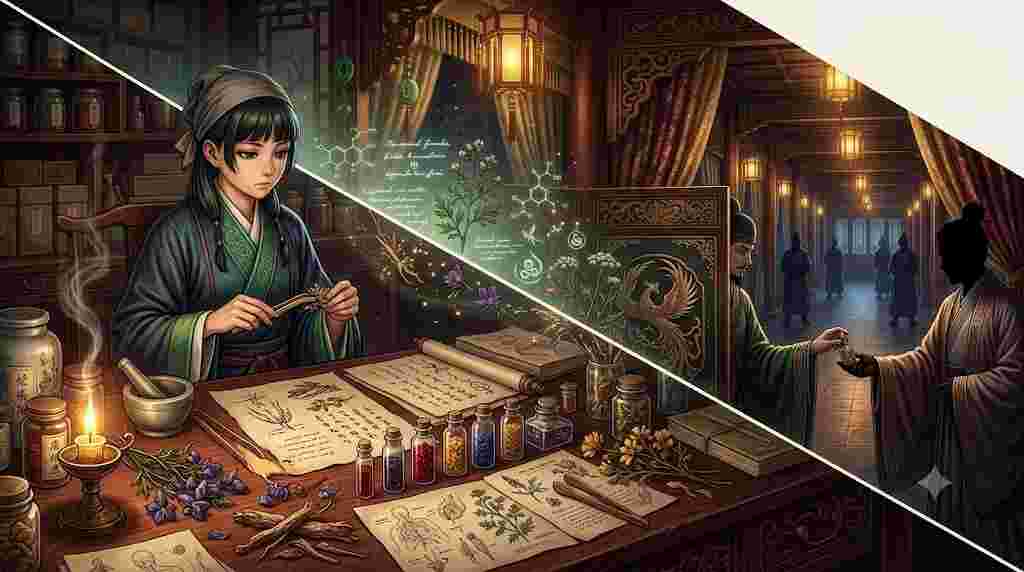
You’ve seen the anime adaptation climbing the charts, but the raw sequential art in the apothecary diaries manga offers a far denser intellectual puzzle than moving pictures can convey. Scrolling past static panels without analyzing the deliberate gaps in Maomao’s visual storytelling means missing half the poison-laced narrative tension. This deep dive uncovers the hidden paneling structures and character micro-expressions that have turned this series into a publishing phenomenon.
Key Takeaways: Visual Storytelling Intelligence
- Visual Silence vs. Dialogue: Maomao’s most dangerous deductions happen in wordless panels, where the art forces your eye to the specific physical evidence she catalogs.
- The Curse of the “Eunuch” Framing: Jinshi’s gender ambiguity is deliberately obscured not by text, but by strategic panel bordering that denies the reader full-body context clues.
- Poison as a Narrative Stopwatch: Every ingested substance introduces a strict biological deadline, a storytelling tool that replaces combat countdowns with metabolic urgency.
Cultural Pharmacopeia: The Backbone of Conflict
Unlike conventional action-driven narratives, conflict resolution here hinges entirely on compound analysis. The Square Enix manga releases catalog shows this title taking a unique risk by prioritizing intellectual dopamine hits over sword fights.
Unraveling the Medical Mystery Subgenre
The series doesn’t just use medicine as a backdrop; it weaponizes alkaloid chemistry. When discussing the historical medical manga tag, critics often point to a clinical detachment. Yet, Natsu Hyuuga’s writing, combined with Nekokurage’s art, injects raw humanity into the diagnosis. You aren’t just reading about a mysterious illness; you’re seeing the patient’s pupils constrict on the page—a subtle visual detail the anime often passes by too quickly.
The Pharmacological Accuracy Controversy
A frequent debate within the manga analysis blog sphere questions how much creative liberty the series takes with Tang dynasty medicine. The truth is a tight balance. The raw ingredients (like arsenic ores) are historically accurate, while their immediate antidotal applications are slightly compressed for narrative speed. This creates a “hyper-reality” that educates just enough to make the reader feel brilliant for guessing the diagnosis alongside Maomao.
Structural Breakdown: The Four-Panel Poison Cycle
Every arc in the apothecary diaries manga follows a distinct formula that reads like a medical journal. You don’t simply turn a page; you complete an autopsy step.
- Symptom Presentation: The initial color page or splash panel always zooms in on a physical anomaly—swollen joints, discolored lips, or a specific behavioral tic ignored by the court.
- Differential Diagnosis: A sequence of tight close-ups where Maomao narrows down the toxin. Here, the gutter space between panels represents time passing during herbal trials.
- Antidote Application: The emotional climax isn’t a declaration of love; it’s the moment the “test subject” (often Maomao herself) swallows the remedy, panel borders often breaking into chaotic, fragmented shards.
- Political Consequence: The final silent spread reveals who ordered the poisoning, usually through a shadowed silhouette reveal that Nekokurage executes with chilling simplicity.
Artistic Review: Panel Layout and Palace Intrigue
You cannot discuss the Square Enix manga releases without highlighting the spatial genius of the Inner Palace layout. Nekokurage uses deep, forced perspective shots of the corridors not just as backgrounds, but as visual metaphors for class rigidity.
Character Design and Non-Verbal Cues
Maomao’s design is a masterclass in restraint. Her “ugly” freckled act is merely a visual costume she paints on for the reader. The Nekokurage art style thrives in the subtle rebellion of her hands—often drawn purposefully ugly and calloused next to the delicate, idle hands of the concubines. The artist prioritizes texture over beauty, an obsession that makes the manga feel more tangible than its animated counterpart.
The Jinshi Paradox: Gaze and Gender Performance
The panels invite you to gaze at Jinshi’s beauty, then immediately punish you for falling into the trap. The character analysis manga crowd often misses how the laugh lines and “serious” shading filters are swapped to toggle between the “eunuch manager” and the “imperial brother.” This visual switch is the manga’s true plot twist engine, entirely dependent on ink density rather than dialogue.
Trajectory of the English Volumes: Localization Wins
The slow-burn climb of the apothecary diaries manga in Western markets vindicates the tactile experience of print. The English localization retains the sharp scientific terminology without drowning the reader in footnotes, a critical achievement. Where other series lose steam in translation, this one gains clarity, as the technical terms for medieval poisons actually flow better in Latin-rooted English than in phonetic Japanese.
Future Outlook: The Western Capital Arc
Peeking ahead at the light novel source material, the manga adaptation is barreling toward the most structurally complex arc involving foreign traders and fungal outbreaks. The art team will face a monumental challenge: drawing microscopic spore effects in a way that reads visually like a tangible, creeping threat. The market demand for a new volume is hitting fever pitch, making it likely we’ll see a deluxe hardcover edition purely based on this upcoming medical crisis.
Schema-Ready FAQ: Answering the Search Demand
What is the main plot of The Apothecary Diaries manga?
The story follows Maomao, a sharp-witted apothecary sold into service at the imperial palace, who uses her toxicology knowledge to solve medical mysteries. Her quiet life is upended when she catches the attention of the handsome eunuch official, Jinshi, who drags her into high-stakes political conspiracies.
Is The Apothecary Diaries manga different from the anime?
While both follow the same core source, the manga pauses longer on the forensic deduction process, offering visual clues hidden in the backgrounds that the anime’s pacing must gloss over. The manga’s art by Nekokurage also adds a delicate, historical texture to fabrics and architecture that animation simplifies.
Who is the artist behind The Apothecary Diaries manga?
The manga is illustrated by Nekokurage, known for a highly detailed shoujo-influenced style and expressive, doll-like character eyes. The original story is written by Natsu Hyuuga, with character designs initially inspired by Touco Shino.
Does the Apothecary Diaries manga contain romance?
Yes, the narrative features a simmering, slow-burn dynamic between Maomao and the beautiful eunuch Jinshi, though Maomao remains aggressively indifferent to his advances. The romantic tension is built entirely through small physical gestures and Jinshi’s jealous looks, rather than explicit confessions.
Why does Maomao find poison and medicine so interesting?
Maomao views poison as a tool of neutralization and a biological puzzle to be solved, a fascination she developed while raised by her eccentric apothecary father. Her experimental attitude borders on self-harm, as she frequently tests concoctions on herself purely to observe the physical effects.
How many volumes of The Apothecary Diaries manga are out in English?
The English publication by Square Enix Manga & Books currently has over 11 volumes available in print, catching up quickly to the Japanese serialization. The series is still ongoing, with new English editions released on a steady quarterly schedule.
The Final Dose: Your Diagnostic Takeaway
The apothecary diaries manga isn’t just a passive reading experience; it’s a mental chess match drawn with a fine brush tip. Whether you’re here for the medical sleuthing or the coded romantic tension, the panels always hold more secrets than the dialogue balloons. Which poison case study from the early chapters do you think still holds an unsolved clue for future volumes? Sound off with your forensic theories below.